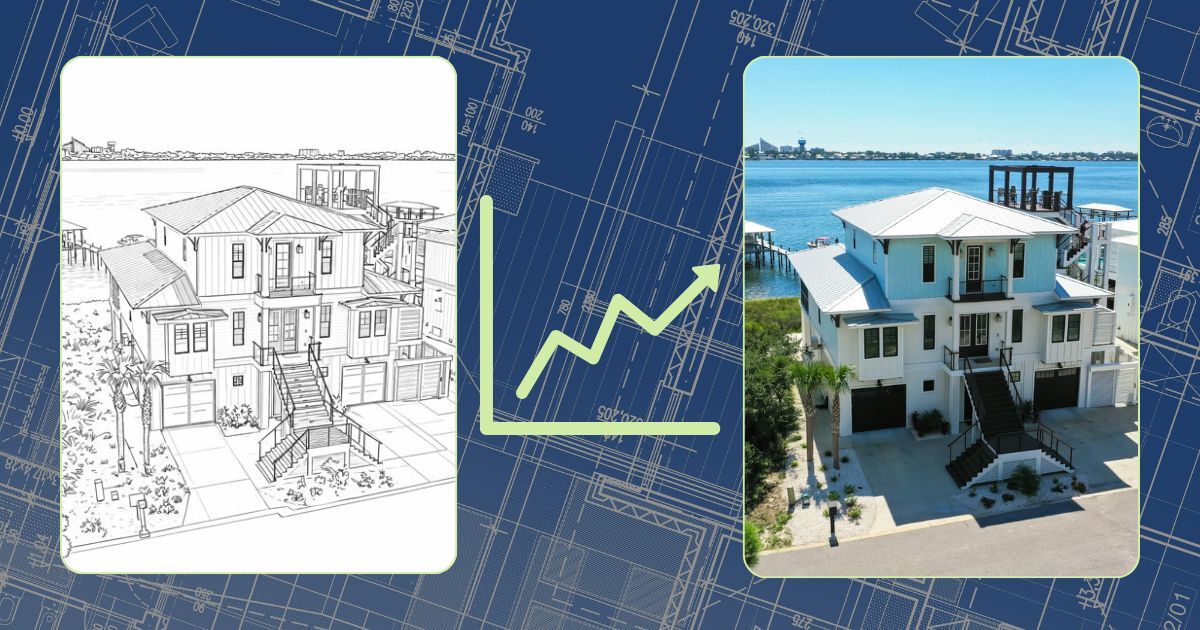
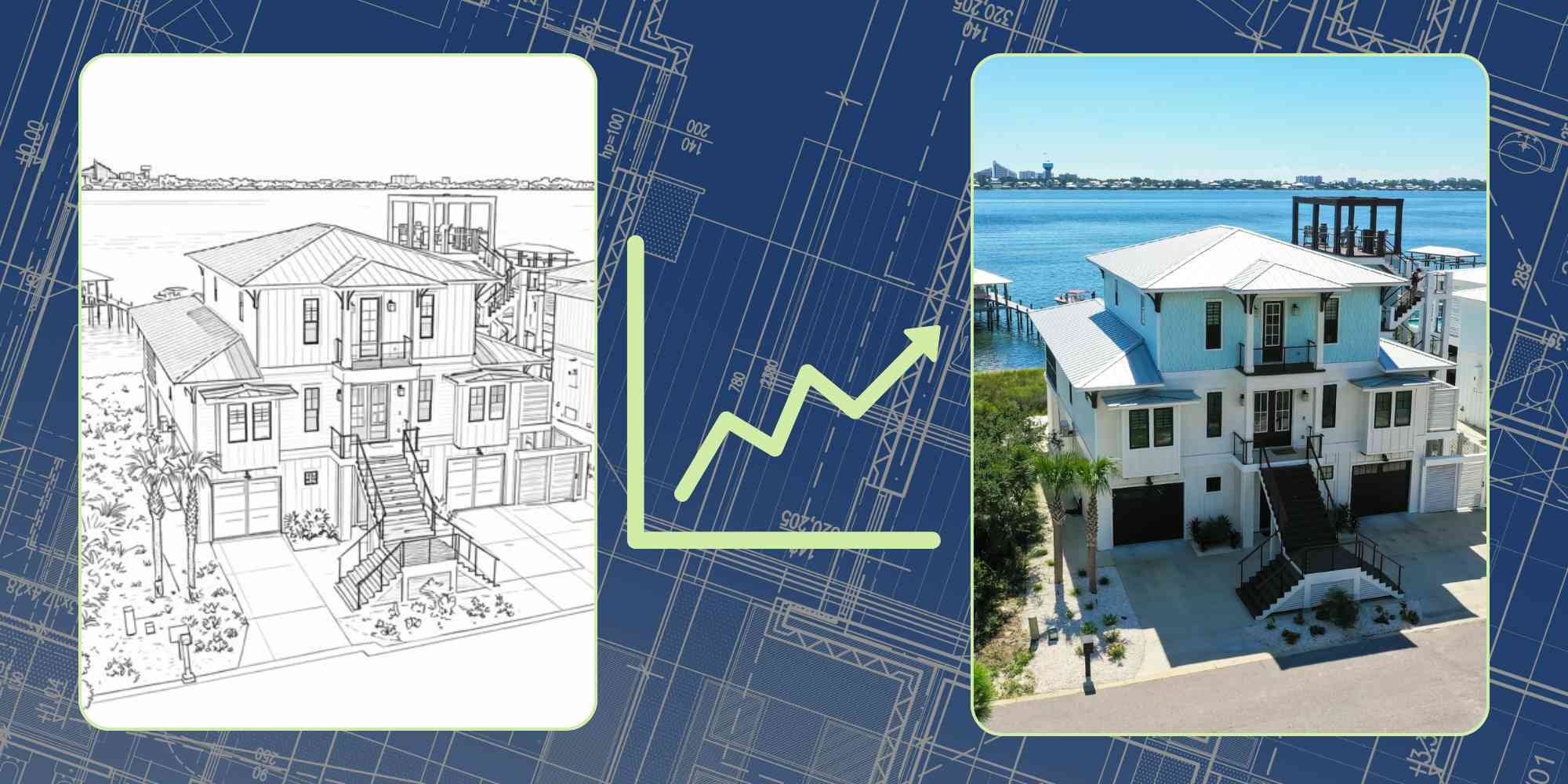
Pricing out a custom home involves a lot more than square footage and style. From site prep and finish levels to outdoor living and utility hookups, there are a lot of details that shape your final budget.
This blog breaks down the top factors that influence the cost of building a custom home in Pensacola. Learn how size, layout, materials, permits, site work, energy upgrades, and more affect your budget.
Here's an overview of what will affect your custom home cost:
1. Size and Layout of the Home2. Land and Site Conditions
3. Design Complexity and Custom Features
4. Material Selections and Finish Levels
5. Labor Costs and Builder Experience
6. Permits, Fees, and Local Regulations
7. Utility Connections and Infrastructure
8. Energy Efficiency and Sustainability Upgrades
9. Interior Appliances and Fixtures
10. Outdoor Living and Landscaping
1. Size and Layout of the Home
The square footage of your home is one of the biggest factors influencing your custom home building cost, since more space means more materials, labor, and time. It’s not just about how big the home is, but how it’s designed.
Key Cost Considerations Based on Size & Layout:
-
Total square footage (larger = more expensive)
-
Number of stories (single-story may cost more per SF than multi-level)
-
Design complexity
-
Open layouts vs segmented rooms
-
Structural reinforcements for large, open spaces
2. Land and Site Conditions
Your lot can have a big say in your overall budget. Some homesites in Pensacola are just easier to build on, flat, cleared, and already hooked up to utilities. Others? Not so much.
If your lot needs tree clearing, grading, or major drainage work, those are real costs that can sneak up quickly. And if you’re building near the coast or in a flood zone, you may need to add pilings or an elevated foundation to meet Florida building codes.
Rural lots can come with their own surprises, such as needing a septic system, a well, or a power hookup. These kinds of expenses to include when budgeting for a home aren’t always obvious upfront, but they make a huge difference in the final price tag.
A builder with local experience can help you spot these early and plan accordingly.
Key Site Factors That Affect Cost:
-
Tree removal and land clearing
-
Soil quality and grading needs
-
Flood zone requirements (elevated foundations, pilings)
-
Utility access (water, sewer, power, gas)
-
Driveway installation and site access
-
Permitting and impact fees from the local municipality
3. Design Complexity and Custom Features
More complex designs require more engineering, more specialized labor, and often more materials. Also, specialty spaces are amazing for entertaining and everyday enjoyment, but they’ll also affect your custom home costs.
Still, these kinds of personalized upgrades can be a smart investment in both value and everyday life. Just be sure to factor them into your custom home budget from the start. But, as usual, a great design-build team will help guide you through design decisions to keep your budget intact.
Examples of Custom Features That Increase Cost:
-
Vaulted or tray ceilings with integrated lighting
-
Floor-to-ceiling fireplaces or feature walls
-
Custom cabinetry and millwork
-
Specialty rooms (theater, gym, library, wine room)
-
Interior architectural arches, beams, or curved walls
-
Smart home integration with lighting, climate, and security
4. Material Selections and Finish Levels
The finishes you choose have a huge influence on your overall custom home building cost. From flooring and countertops to trim and tile, every material carries its own price tag, and some upgrades are well worth it.
The key is understanding where you want to go all-in and where you can dial things back without sacrificing quality or aesthetics.
Choosing durable, coastal-appropriate materials can also help you get more mileage out of your investment in Pensacola’s climate. Your builder should walk you through every option so you can strike the right balance between style and budget.
Here Are a Few Common Selections That Impact Your Final Price:
-
Countertops: Marble, quartzite, and quartz cost more than laminate or butcher block
-
Flooring: Wide-plank hardwood or natural stone is pricier than luxury vinyl or engineered wood
-
Cabinetry: Custom-built cabinets with soft-close hinges and specialty storage add cost
-
Lighting & Fixtures: Designer or imported finishes increase both materials and install time
-
Tile & Trim Work: Intricate patterns and custom installations often require more labor

5. Labor Costs and Builder Experience
Labor is one of the biggest variables in your custom home budget. The experience level of your builder, the quality of their subcontractors, and how efficiently the project is managed can make a big difference.
In Pensacola, labor costs can vary depending on trade availability, demand, and the complexity of the work. Builders who work with trusted, skilled tradespeople tend to deliver better results, but you’ll often pay more for that craftsmanship and reliability. Don't skimp on skill level, though. It's an investment that's well worth the price tag.
The key is finding a builder who brings the right team to the table and knows how to keep things moving smoothly.
What Impacts Labor Costs and Builder Value:
-
Quality of subcontractors: Top-tier trades bring higher skill (and higher rates)
-
Local labor market: Costs fluctuate based on demand and region
-
Builder efficiency: Experienced builders streamline schedules and avoid delays
-
Communication & leadership: Strong project managers reduce errors and rework
-
Long-term value: Better-built means fewer repairs and better resale
6. Permits, Fees, and Local Regulations
Every custom home in Pensacola must meet city codes and zoning regulations, and depending on your lot, neighborhood, and design, those requirements can add time and cost.
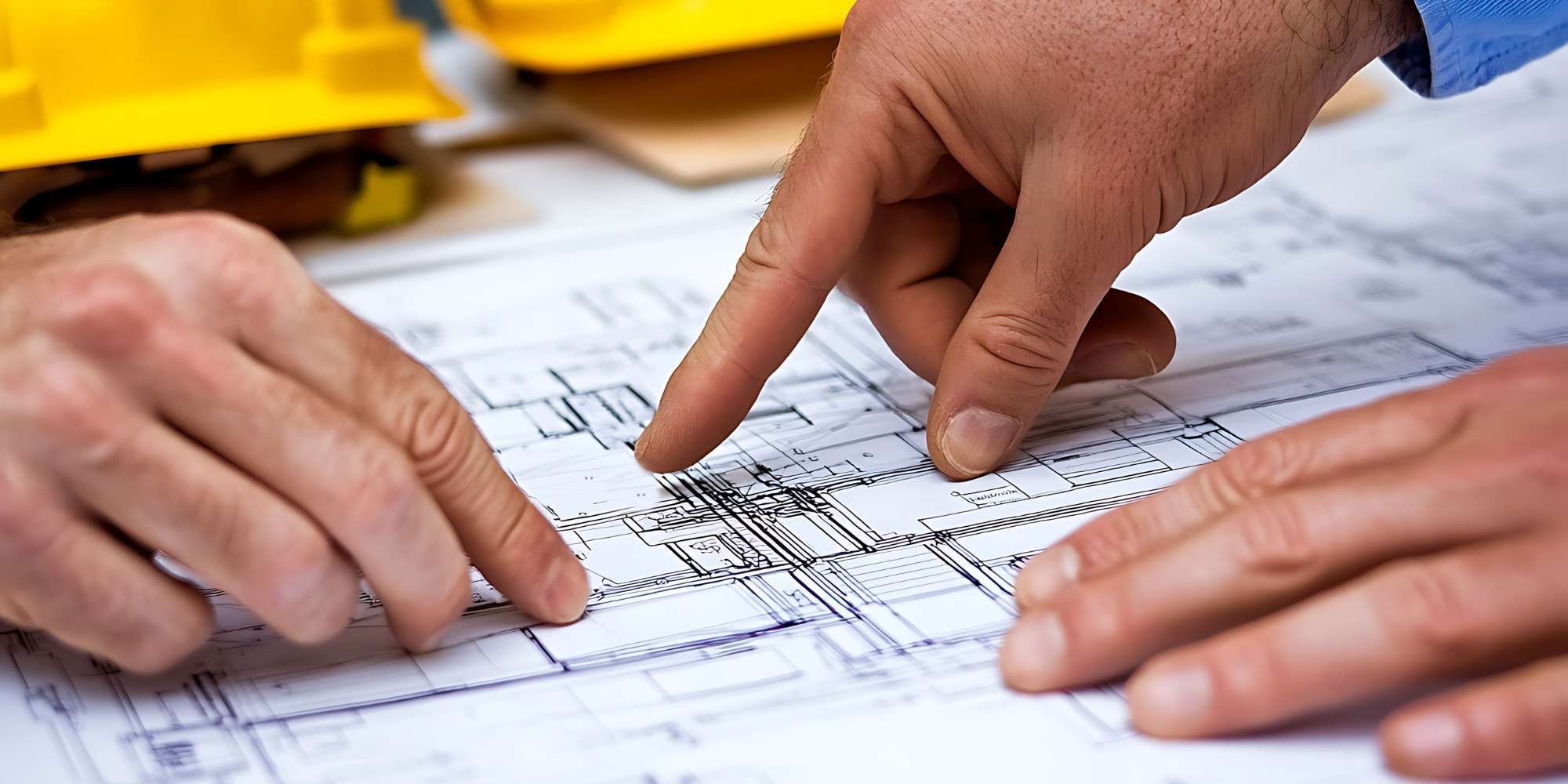
You’ll need to budget for everything from engineering and architectural plans to city permitting fees, HOA approvals, and potential impact studies. Some properties may require environmental assessments or stormwater plans, especially near wetlands or flood-prone zones.
A local builder can help you navigate these hurdles and factor them into your upfront budget.
What to Account For:
-
Building permits and plan reviews
-
Architectural and engineering drawings
-
Environmental studies
-
HOA and architectural review board approvals
-
Utility impact and tap fees
7. Utility Connections and Infrastructure
Utility access might not be the most exciting part of building a custom home, but it’s definitely one of the most important. The cost to connect to city water, sewer, electricity, and gas varies depending on your lot’s location and proximity to public lines.
If your property is in a more rural or undeveloped area, you may need a septic system, well drilling, or propane, each with its own permitting, engineering, and cost implications. And don’t forget about internet, cable, and smart home wiring. If you're planning to integrate smart features or home automation, you'll want to make sure your infrastructure can support it right from the start.
Utility-Related Costs to Keep in Mind:
-
City sewer vs. septic system
-
Water and gas hookups
-
Electric service
-
Internet and smart home wiring
8. Energy Efficiency and Sustainability Upgrades
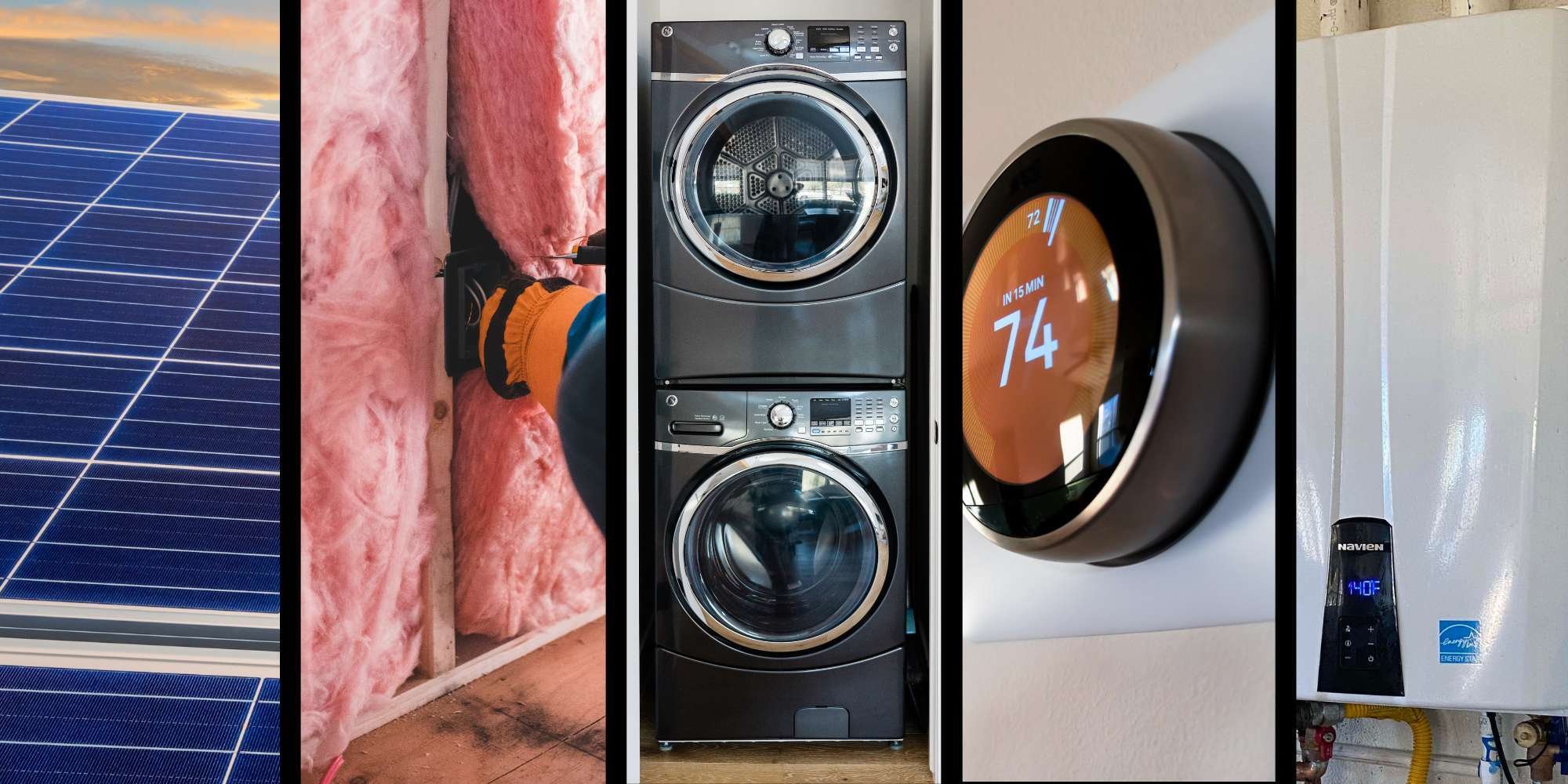
Energy-efficient upgrades might not be the flashiest part of your custom home, but they’re often some of the smartest. Adding sustainable features like solar panels or high-performance insulation can lower utility costs and boost long-term value, especially in Florida’s climate.
Smart HVAC systems, tankless water heaters, and energy-efficient windows help regulate indoor temps and reduce energy waste. You can also explore passive solar orientation, energy-efficient framing techniques, or even home battery systems to get the most out of your design. While these upgrades come at a higher upfront cost, they often pay for themselves over time.
Common Upgrades to Consider:
-
Solar panels and battery storage
-
Insulation and energy-efficient framing
-
ENERGY STAR® appliances and windows
-
Smart thermostats and HVAC zoning
-
Tankless water heaters
9. Interior Appliances and Fixtures
Your selections for appliances and fixtures can swing the final price of your custom home more than you might expect. High-end kitchen packages, luxury bathroom features, and integrated home tech systems all add comfort and convenience.
A professional-grade kitchen with a built-in refrigerator, six-burner gas range, and dual dishwashers will cost significantly more than standard appliances. The same goes for curated plumbing fixtures, lighting packages, and whole-home A/V systems.
Big-Ticket Interior Upgrades That Affect Cost:
-
Luxury kitchen appliances
-
Freestanding tubs and high-end plumbing fixtures
-
Designer lighting and layered lighting plans
-
Smart home wiring and speakers
-
Built-in coffee systems or wine fridges
10. Outdoor Living and Landscaping
In Pensacola, outdoor living isn’t a bonus. It’s a way of life.
Creating an outdoor space that feels just as polished and personalized as the inside of your home adds value, lifestyle perks, and serious wow factor.
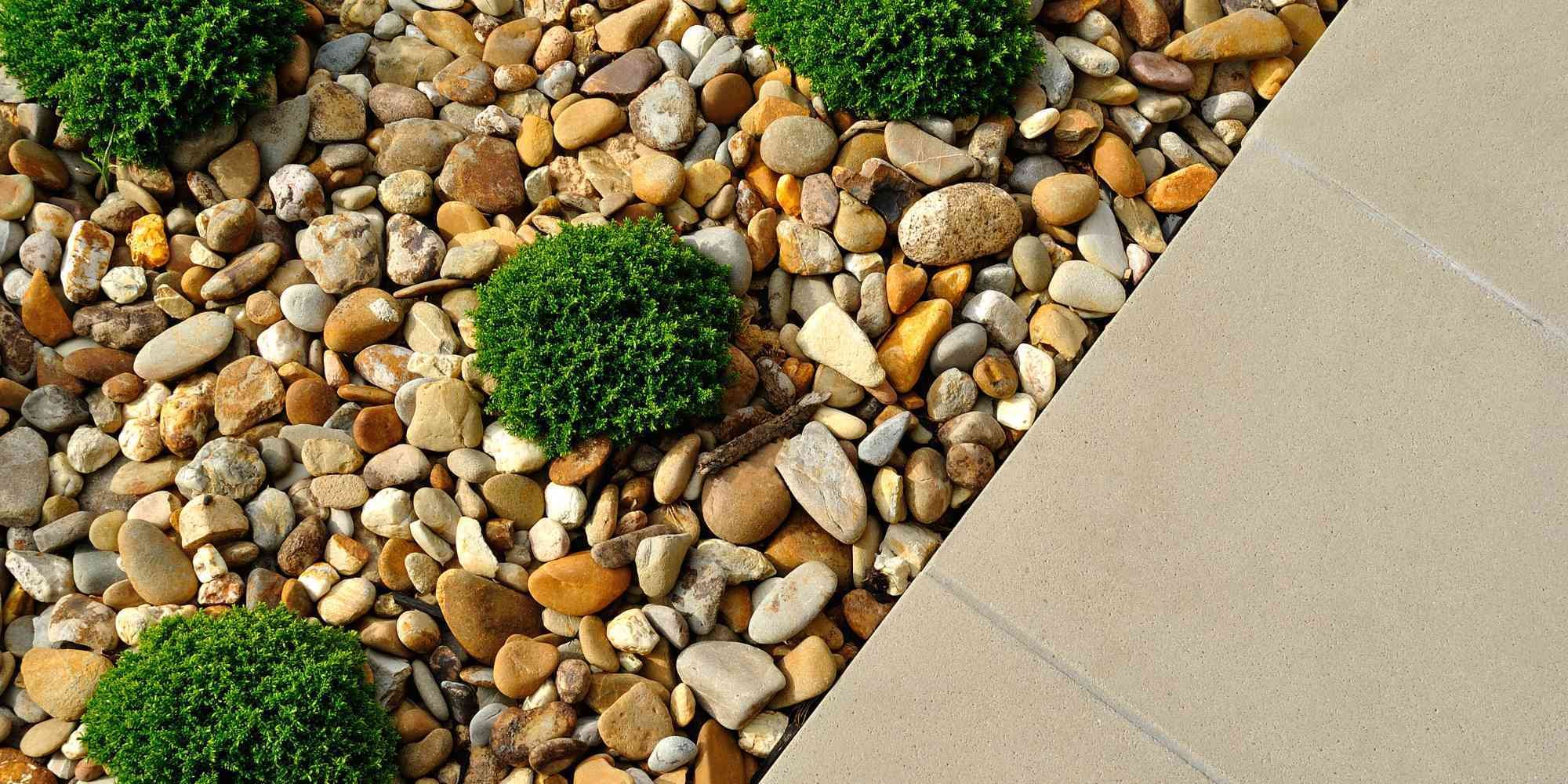
Custom pools, patios, outdoor kitchens, and cabanas are some of the most desirable features in Florida custom homes. These spaces can be designed for year-round enjoyment, with features like shade structures, fire pits, lighting, and built-in grilling stations. On top of that, you'll want to budget for driveways, fencing, irrigation, and landscaping to complete the exterior experience.
Outdoor Upgrades That Affect Cost:
-
Custom pool or spa installation
-
Outdoor kitchen and living areas
-
Hardscaping
-
Landscaping and irrigation
-
Fencing and driveways

Budget for Your Home Better With an Expert
There’s no one-size-fits-all number for building a custom home. But understanding what drives cost gives you power and perspective. The right builder will help you balance design, functionality, and budget every step of the way.
Let’s build you a home that’s worth every dollar. Reach out to us at Urban Infill and let's design a custom home that exceeds your expectations and stays within your budget.