When most people start thinking about building a custom home, they imagine what the floor plan, kitchen, and exterior finishes might look like.
However, one of the most important decisions happens long before any walls go up. Choosing the right foundation affects everything from your new home’s flood resilience and insurance requirements to construction costs and long-term performance.
In Pensacola, the right foundation depends primarily on the property's flood zone, elevation requirements, and site conditions, not simply homeowner preference. Understanding the differences between foundation types can help you make the right choice for your lot and your long-term goals.
In this blog, we explain the differences between piling foundations and slab foundations in Pensacola. You’ll learn when each is appropriate, how flood zones influence foundation choices for new home construction, and what factors every homeowner should consider before building.
Table of Contents
- What Is a Slab Foundation?
- What Is a Piling Foundation?
- How Flood Zones Influence Foundation Decisions
- Common Misconception: Every Waterfront Home Needs a Piling Foundation
- Comparing Slab vs. Piling Foundations
- Which Foundation Is Right for Your Property?
- Signs Your Property May Be Better Suited for a Piling Foundation
- How Urban Infill Helps Homeowners Choose the Right Foundation
- Frequently Asked Questions About Types of Foundations in Pensacola, FL
What Is a Slab Foundation?
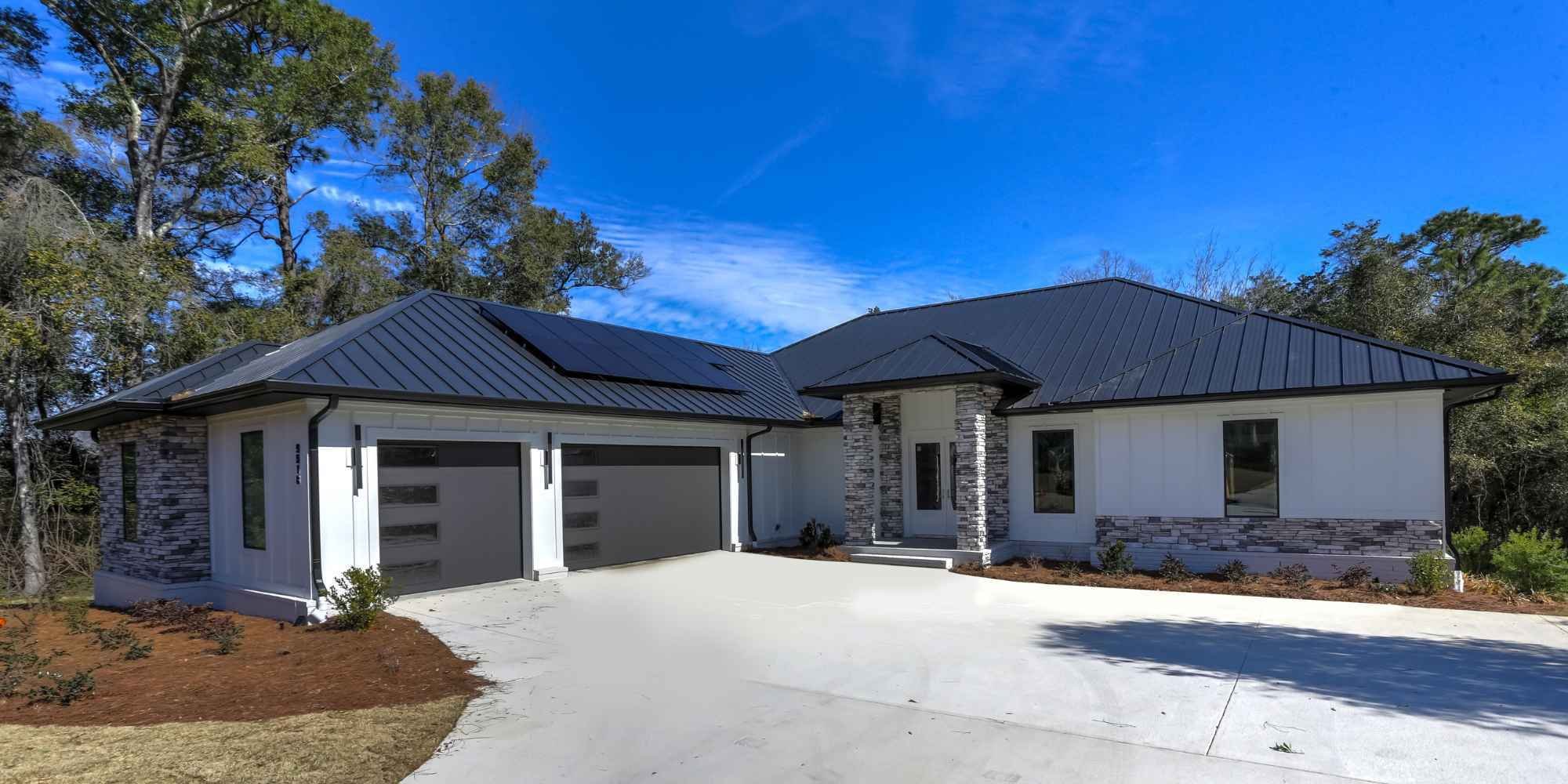
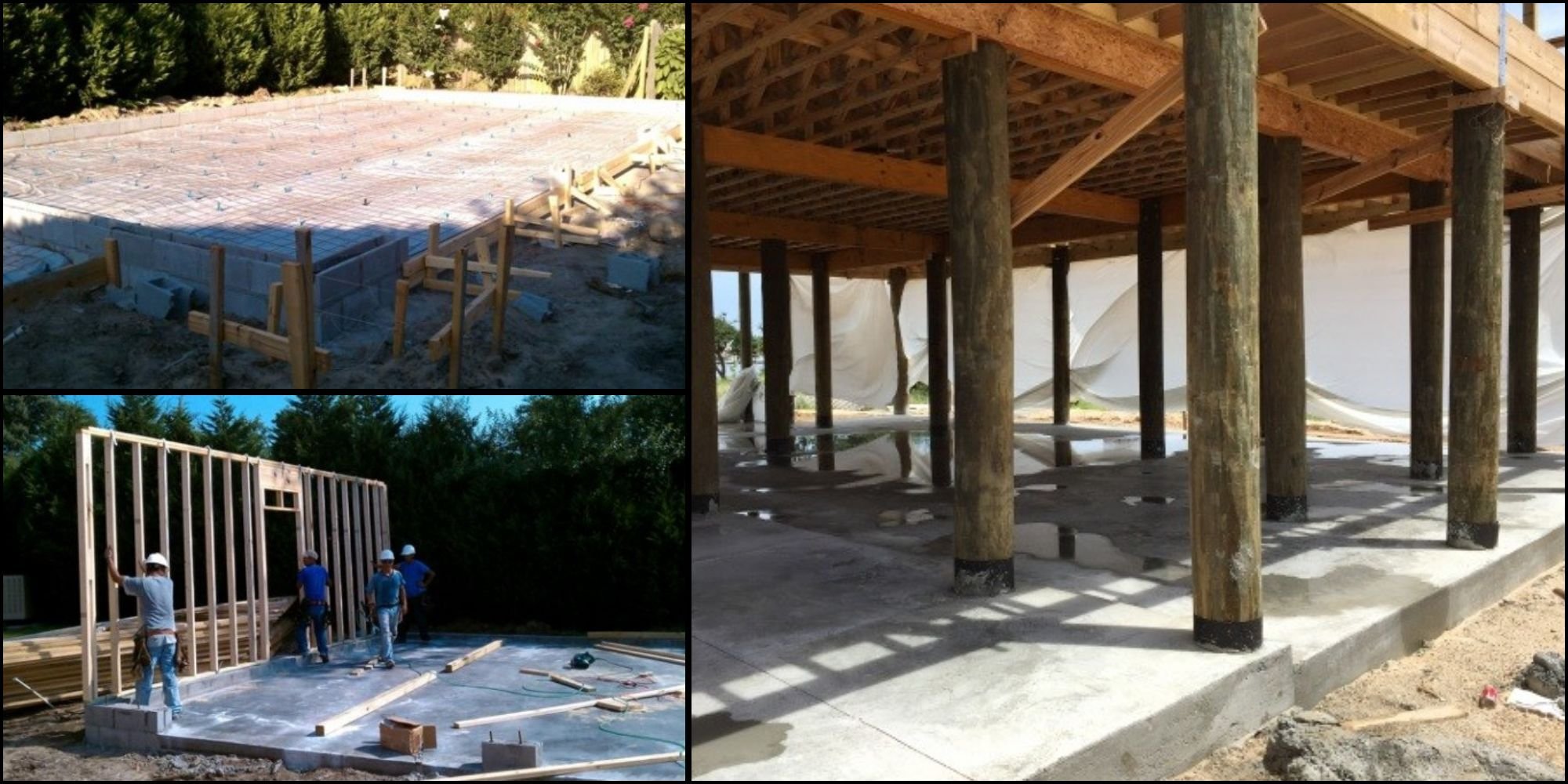
A slab foundation is a reinforced concrete foundation poured directly on prepared ground.
Slab foundations are one of the most common foundation types throughout Florida because they’re cost-effective and durable, making them well-suited for many residential lots. If your property’s soil is stable and it doesn’t have any elevation requirements, a slab foundation can offer a practical, long-lasting base for your custom home.
Slab foundations are usually a good fit for:
- Interior lots outside high-risk flood zones
- Relatively flat sites
- Homes that don’t require significant elevation
- Homeowners looking for a straightforward foundation system
While they work well for many new builds, not every Pensacola property is ideal for a slab foundation.
What Is a Piling Foundation?
A piling foundation elevates a home above the ground using deep structural posts that transfer the home’s weight into stable soil underneath.
This foundation type is commonly used for building waterfront properties and homes in areas where flood protection or elevation requirements make traditional slab construction impractical. Instead of resting directly on the grade, the living space is raised above potential flood levels to help protect the structure as well as the people living inside.
Benefits of piling construction can include:
- Better flood resilience
- Compliance with FEMA elevation requirements
- More robust protection during storm surge events
- Space below the home for parking or storage (where permitted)
- Reduced risk of water damage in finished living areas
- Maximizing scenic views
Every property is different, so piling foundations aren’t automatically required for every coastal home.
How Flood Zones Influence Foundation Decisions
Flood zone requirements can play a major role in determining which foundation type is most appropriate for a custom home.
One of the first steps in planning your new residence is understanding whether your property lies within a designated FEMA flood zone. Depending on the site’s location, homeowners should consider base flood elevation requirements, local building codes, drainage conditions, insurance factors, and site-specific engineering.
Along Pensacola Bay, Perdido Key, Santa Rosa Sound, and other low-lying coastal areas, elevated construction may be required for certain properties to meet local regulations.
For others, a slab foundation is still an appropriate solution. The key is to begin discussing foundation options early in the planning process and evaluate the lot before finalizing your home’s design.
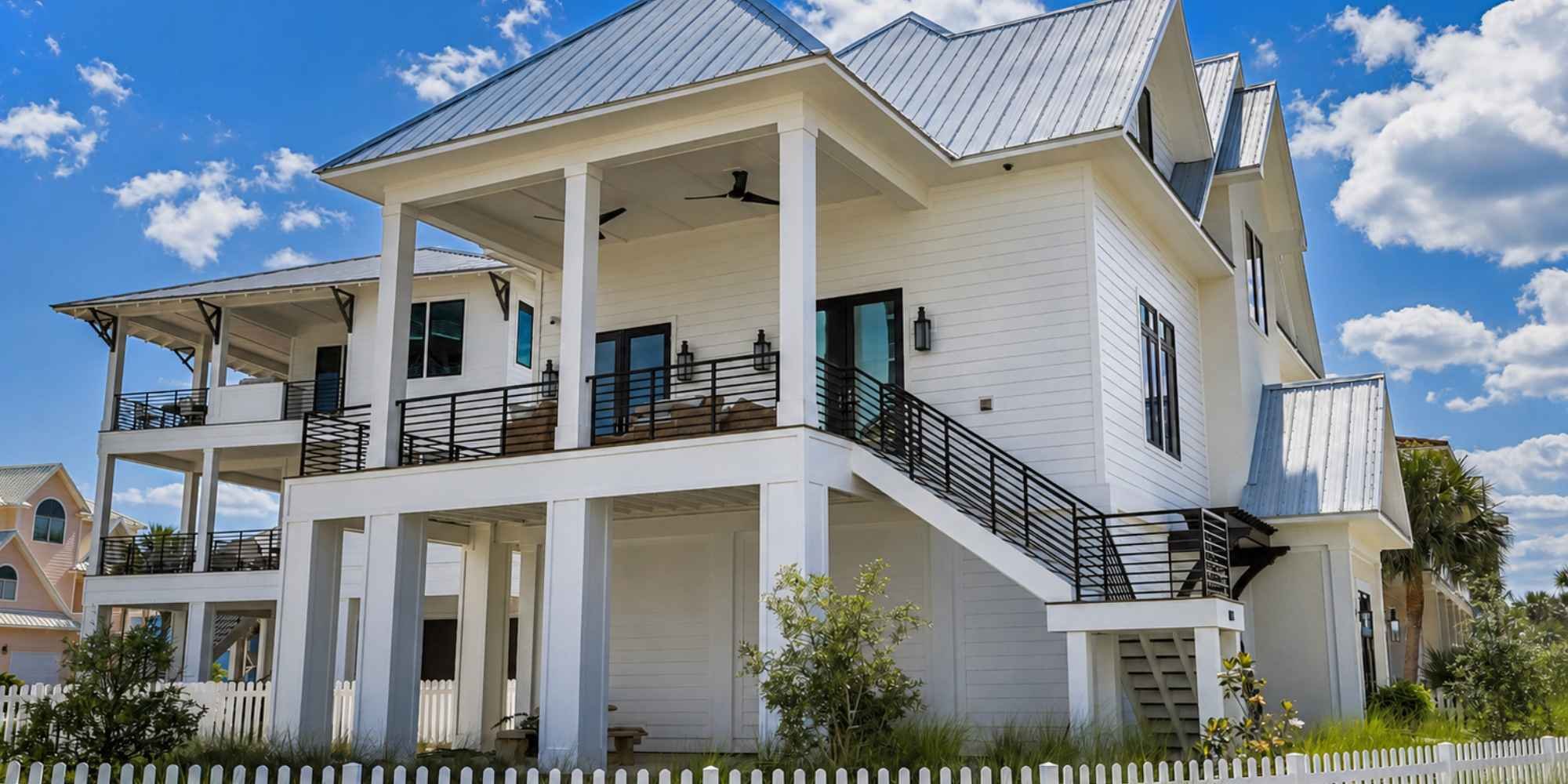
Common Misconception: Every Waterfront Home Needs a Piling Foundation
One of the most common misconceptions we hear is that every waterfront home in Pensacola must be built on a piling foundation. While it’s often the right solution for many coastal properties, the decision isn’t solely determined by proximity to the water.
The type of foundation a home requires depends on factors including:
- FEMA flood zone designation
- Base Flood Elevation (BFE)
- The property's existing elevation
- Local building codes
- Site-specific engineering
For example, two lots along the Gulf Coast may seem nearly identical, but have very different building requirements based on their elevation and flood zone classifications. One property might require elevated construction, while another may be better suited for a slab foundation.
Comparing Slab vs. Piling Foundations
Neither type of foundation is inherently better. While many homeowners assume piling foundations are the premium option because they cost more, performance matters more than prestige. The right choice depends on your property and your goals for your new home construction.
This table highlights the biggest differences homeowners should consider when comparing slab and piling foundations.
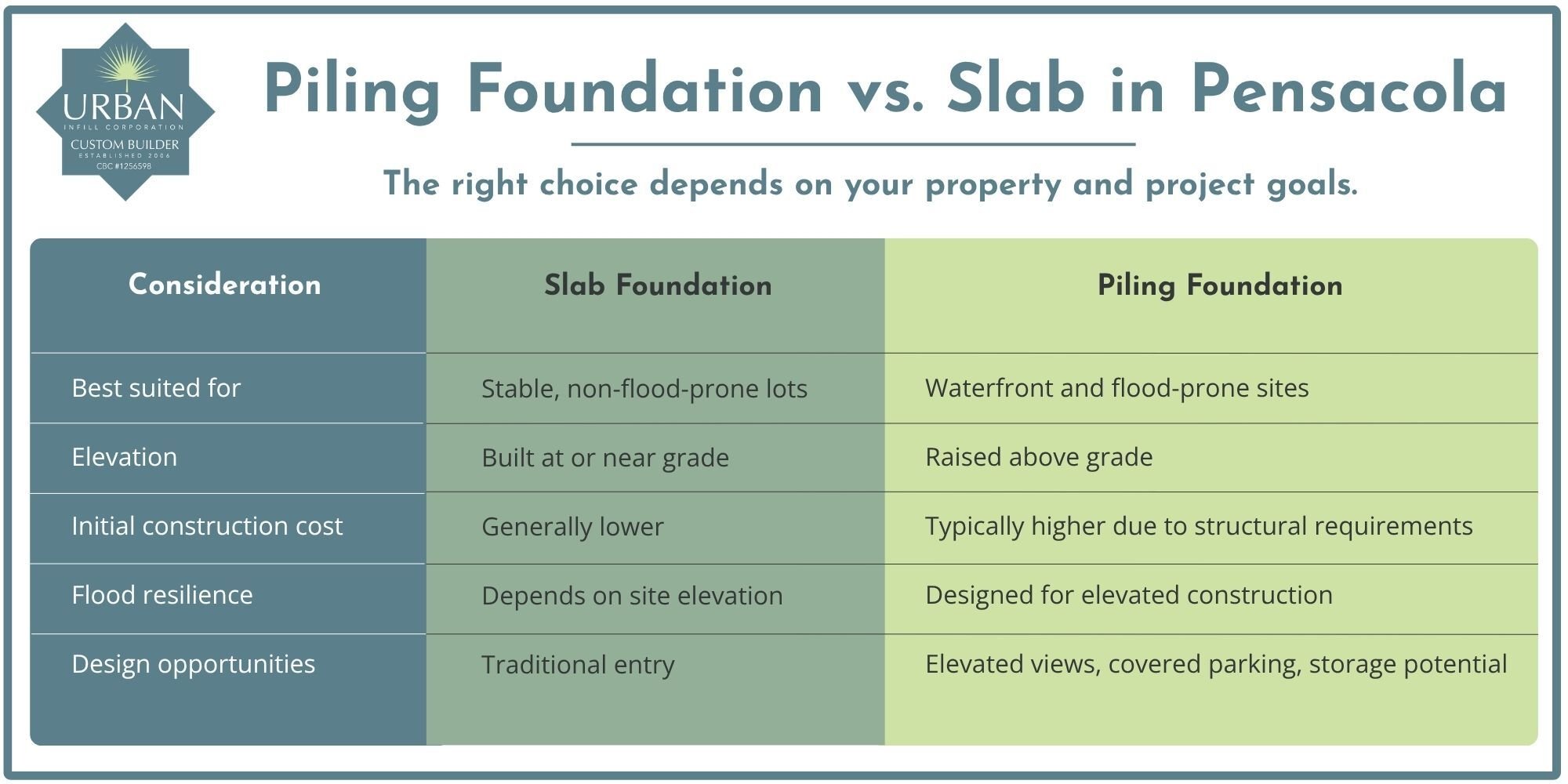
Piling construction often costs more upfront, but it might be the most practical option for certain Gulf Coast foundations and, in some cases, is required. The higher cost comes from the deeper structural engineering, specialized equipment, and additional materials required to support an elevated structure.
Which Foundation Is Right for Your Property?
The best foundation for your custom home depends on your lot, not just the design of your space. Every homesite comes with its own opportunities and constraints.
For example, a homeowner building on an interior lot in Cordova Park could have very different foundation requirements than someone building a waterfront home overlooking Pensacola Bay.
While every property is different, most foundation decisions come down to three questions:
- What does local code require?
- How does the lot drain and handle water?
- What level of long-term resilience are you trying to achieve?
Choosing the most appropriate foundation early helps avoid redesigns later in the process and ensures the home is built to last in its location. An experienced Pensacola design-build custom home builder who knows the ins and outs of Gulf Coast construction can help you determine the best solution for your property.
Signs Your Property May Be Better Suited for a Piling Foundation
If you can check off several of these boxes, elevated construction might be worth exploring for your property:
- You’re building on or near the waterfront
- The property sits within a FEMA flood zone
- Local elevation requirements exceed what a slab foundation can accommodate
- Maximizing views is a priority
- Storm surge or drainage is a concern
- You’re planning to build on a narrow or environmentally sensitive site
A professional site evaluation is the best way to determine whether piling construction is necessary or beneficial to your project.
How Urban Infill Helps Homeowners Choose the Right Foundation
Choosing a foundation should be based on site conditions, building requirements, long-term performance, and homeowner preferences.
Foundation decisions aren’t something we make from behind a desk. Before recommending a foundation system, the Urban team evaluates the property itself to explore flood zone requirements, drainage, topography, and your long-term goals. That allows us to recommend the approach that’s right for your home instead of relying on assumptions.
Because we’re a design-build firm, foundation planning happens alongside custom home design development, which allows structural decisions, budgeting, and construction planning to align from the beginning.
Our goal is to help homeowners understand the tradeoffs and make informed, confident decisions, whether their project calls for a traditional slab or piling foundation.
Thinking About Building a Custom Home on the Gulf Coast?
Choosing the right foundation starts with understanding the property you’re building on. An early site assessment can help identify flood zone requirements, elevation considerations, and the foundation that’s best suited for your home, whether you’re comparing lots or already own land. If you’re planning a custom home in Pensacola or a nearby area along the Gulf Coast, we’d be happy to help you get started with a conversation.

Frequently Asked Questions About Types of Foundations in Pensacola, FL
Is a piling foundation better than a slab foundation?
Not necessarily. A piling foundation tends to be the better option for waterfront or flood-prone properties, while a slab foundation is more appropriate for many inland lots. The right choice depends on your property’s location, elevation, and building requirements.
Do I need a piling foundation to build a home in Pensacola, FL?
Not every Pensacola home requires a piling foundation. It depends on factors like flood zone designation, local building codes, and site conditions.
Are piling foundations more expensive than slab foundations?
Generally, yes. Piling foundations usually require additional engineering, materials, and labor compared to a slab foundation, but they may be necessary or provide long-term benefits on certain properties.
Can I build a slab foundation in a flood zone?
It depends on your property’s flood zone and local building requirements. Some sites might require elevated construction to meet code and reduce flood risk, while a slab foundation may be appropriate for others.
How do I know which foundation is right for my Pensacola lot?
A site evaluation is the best place to start. Reviewing flood maps, drainage, soil conditions, and local regulations with your custom home builder helps determine which type of foundation is most appropriate before design begins.